OM1, OM2, OM3 Shade Guide: A Comprehensive Overview (Updated 03/30/2026)
This guide details the OM1, OM2, and OM3 shades, frequently utilized in veneer cases for achieving optimal aesthetic results in dental restorations.
These shades, alongside a 19-color guide, offer dentists a spectrum for precise shade matching and natural-looking brightness, especially for “Hollywood white” smiles.
OM shade guides represent a specialized system within dental aesthetics, designed to facilitate highly accurate shade matching for restorative procedures, particularly veneers. Unlike traditional systems like VITA or 3D, OM shades – specifically OM1, OM2, and OM3 – cater to achieving brighter, more aesthetically driven results, often requested for “Hollywood white” smiles.
These guides are not merely a color spectrum; they represent a nuanced approach to mimicking natural tooth brightness. The system is integrated within broader shade guides, such as the 19-color PMMA guides, offering a comprehensive palette for dentists. Understanding the characteristics of each OM shade – their composition and application – is crucial for successful implementation. The OM system allows for gradual transitions between shades, creating a natural and harmonious appearance, avoiding the stark uniformity often associated with artificial enhancements.
What are OM1, OM2, and OM3?
OM1, OM2, and OM3 are distinct shades within a specialized dental color system, primarily utilized for veneer restorations aiming for a brighter aesthetic. OM1 is often considered the whitest shade, frequently employed for central incisors in full-smile veneer cases. OM2 and OM3 are subsequently used, transitioning outwards from the central incisors to create a more natural and gradual brightness gradient.
These aren’t standalone systems but integrate within broader shade guides like the 19-color PMMA guides. They are defined by ISO/IEC 11801 standards, relating to multimode fiber optics – OM1 utilizes 62.5 micron glass, OM2 uses 50 micron, and OM3 employs enhanced 50 micron glass capable of Gigabit Ethernet. In dentistry, these distinctions translate to varying levels of brightness and translucency, allowing for customized shade matching.
The Role of OM Shades in Dentistry
OM shades (OM1, OM2, and OM3) play a crucial role in achieving aesthetically pleasing and natural-looking dental restorations, particularly with veneers. They address the demand for brighter smiles while avoiding the artificial appearance often associated with uniformly white teeth. Dentists leverage these shades to mimic the subtle variations found in natural dentition, creating a harmonious and lifelike result;
The strategic application of OM shades – typically OM1 for central incisors, transitioning to OM2 or OM3 for lateral teeth – is key. This gradient approach ensures brightness without appearing unnatural. Furthermore, understanding OM shades allows for effective shade conversion between different systems like VITA Classical and VITA 3D, facilitating seamless communication and consistent outcomes in dental labs and clinics.
OM Shades vs. Other Shade Systems (VITA, 3D)
While VITA Classical and VITA 3D are established shade systems, OM shades offer a distinct approach, particularly for achieving highly aesthetic veneer results. VITA systems utilize a broader range of hues and chroma, while OM shades focus on a specific spectrum geared towards brighter, “Hollywood white” aesthetics. Converting between these systems is often necessary.
For instance, a natural shade like B1 (VITA Classical) or 1M1 (VITA 3D) might translate to an OM1, OM2, or OM3 depending on the desired brightness level. Shade conversion charts, like those provided by Dentsply Sirona IPN, are essential tools for this process. Understanding these relationships allows dentists to effectively communicate shade preferences to dental technicians, ensuring accurate and predictable restoration outcomes, regardless of the primary shade system used.
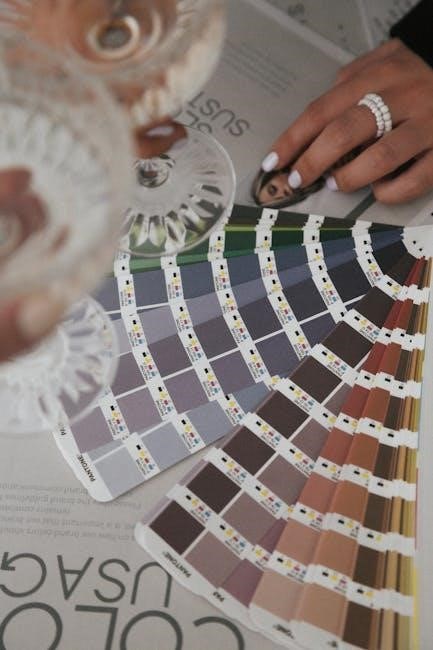
Understanding OM1
OM1 is characterized as a standard 62.5 micron multimode glass, often selected for central incisors in full-smile veneer cases, representing a “Hollywood white” shade.
OM1: Characteristics and Composition
OM1 fiber optic cabling utilizes 62.5 micron multimode glass, a foundational technology in data transmission and, notably, in dental shade guides for restorative work. This designation, defined by ISO/IEC 11801 standards, signifies a specific composition optimized for certain performance characteristics. While originally prevalent, OM1 has been largely superseded by newer standards like OM3 and OM4 for high-bandwidth data applications.
However, within the realm of dental aesthetics, OM1 retains significance as a benchmark for achieving a very bright, almost bleached, appearance. Its composition lends itself well to mimicking highly aesthetic, whiter shades desired in cosmetic dentistry. Understanding its characteristics is crucial for dentists aiming to replicate specific brightness levels, particularly when creating veneer restorations. The fiber’s properties influence how light interacts with the material, impacting the perceived shade.
OM1 in Veneer Cases: Central Incisors
OM1 is frequently the preferred shade for central incisors in full-smile veneer cases where a bright, “Hollywood white” aesthetic is desired. Dentists often strategically employ OM1 to establish the most prominent level of whiteness in the anterior dentition, capitalizing on its ability to mimic a highly aesthetic, bleached appearance. This approach creates a focal point of brightness, drawing the eye to the central region of the smile.
However, it’s crucial to avoid a uniformly white smile, which can appear unnatural. Therefore, a skilled technician will typically transition from OM1 on the central incisors to slightly less intense shades – OM2 or OM3 – on the lateral incisors. This gradient mimics the natural variations in tooth color, resulting in a more lifelike and harmonious aesthetic outcome. Careful planning and execution are essential for successful implementation.
OM1: Identifying the Shade
OM1 is recognized as a distinct shade within comprehensive dental shade guides, frequently appearing alongside the traditional VITA Classical and 3D shade systems. It’s notably included in the NAGY teeth shade guide, which features 19 distinct color tabs for accurate matching, explicitly listing OM1 as one of the available options. Identifying OM1 requires familiarity with these guides and a keen eye for subtle color variations.
Clinically, OM1 represents a very white shade, often categorized as a “Hollywood white.” It’s brighter than many of the standard A shades in the VITA system. Dentists utilize OM1 when patients desire a significantly brighter smile, but must carefully consider its placement to avoid an artificial appearance. Accurate identification is paramount for achieving predictable and aesthetically pleasing results.
OM1 as a “Hollywood White” Shade

OM1 is frequently described as a “Hollywood white” shade, signifying its position at the brighter end of the dental shade spectrum. This designation implies a level of whiteness often associated with cosmetic dentistry aiming for a dramatically enhanced smile. However, achieving a natural aesthetic with OM1 requires careful planning and execution.
Full-smile veneer cases often strategically employ OM1, primarily for central incisors, to establish a focal point of brightness. This is then skillfully transitioned to OM2 or OM3 shades for lateral incisors, creating a more natural gradient. Utilizing OM1 exclusively across all teeth can result in an unnatural, overly uniform appearance. Therefore, understanding its intensity and employing it judiciously is crucial for successful aesthetic outcomes, avoiding a look that appears artificial.
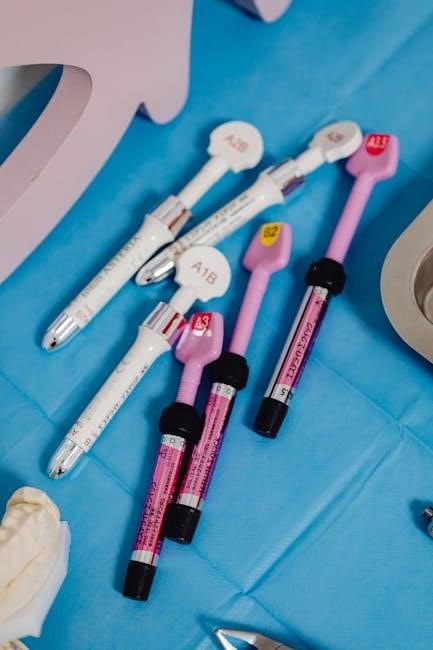
Exploring OM2
OM2 distinguishes itself with unique properties, often applied to lateral incisors and transitional areas within a smile design, creating a seamless and natural aesthetic.
OM2: Properties and Distinctions
OM2 represents a key component within the OM shade system, characterized by its specific properties and how it differs from both OM1 and OM3. Defined as a standard 50 micron glass, OM2 offers a balance between brightness and naturalness, making it exceptionally versatile for dental applications.
Its primary distinction lies in its application – frequently utilized for lateral incisors, it facilitates a smooth transition from the brighter OM1 often used on central incisors. This gradient approach avoids the artificial, uniformly white appearance sometimes associated with solely using the most brilliant shades.
Furthermore, OM2 plays a crucial role in shade conversion charts, bridging the gap between various shade systems like VITA and IPN, allowing for accurate color matching across different materials and brands. Understanding OM2’s nuances is vital for achieving aesthetically pleasing and lifelike restorations.
OM2 Application: Lateral Incisors and Transitions
OM2’s strategic application centers around lateral incisors, where it excels in creating a natural and harmonious smile aesthetic. Unlike central incisors often best suited for the brighter OM1, lateral incisors typically benefit from a slightly more subdued, yet still luminous, shade. OM2 perfectly fulfills this requirement, offering a balanced brightness that complements the overall smile design.
The true power of OM2 lies in its ability to facilitate seamless transitions. By carefully blending OM2 with OM1 on adjacent teeth, dental professionals can avoid harsh color demarcations, resulting in a more organic and lifelike appearance. This gradient approach mimics the subtle variations found in natural dentition.
Effectively utilizing OM2 requires a keen eye for color and a thorough understanding of how shades interact, ensuring a beautiful and believable restoration.
OM2 Shade Identification
Identifying the OM2 shade requires a discerning eye, as it occupies a crucial middle ground within the OM shade spectrum. It’s not as intensely bright as OM1, yet demonstrably whiter than OM3, making precise recognition essential for successful shade matching. OM2 frequently appears within comprehensive shade guides, such as those featuring 19 distinct color tabs, alongside Vita Classical and Vita 3D references.
Dental professionals often utilize shade conversion charts to correlate OM2 with established systems. These charts demonstrate how OM2 corresponds to shades like B51, B53, B54, and others within the Vita Classical system, aiding in consistent communication and material selection.
Understanding these relationships is key to achieving predictable and aesthetically pleasing results.
OM2 in Shade Conversion Charts
OM2’s position within shade conversion charts is pivotal for seamless integration with established dental shade systems like Vita Classical and Portrait IPN. These charts meticulously map OM2 to corresponding Vita shades, including B51, B53, B54, B83, B84, and a range of others, facilitating accurate translation between different material brands and workflows.
The charts demonstrate that when considering veneer colors, OM2 often serves as a transitional shade, bridging the gap between the brighter OM1 (used for central incisors) and the more natural OM3. This allows for a gradient effect, mimicking the subtle variations found in natural dentition.
Utilizing these charts ensures predictable outcomes and minimizes discrepancies during shade selection.

Delving into OM3
OM3 offers enhanced properties, delivering natural brightness and performance, often used alongside OM2 for achieving realistic and aesthetically pleasing dental restorations for patients.

OM3: Enhanced Properties and Performance
OM3 represents a significant advancement within the OM shade system, characterized by enhanced glass composition and improved performance capabilities. Specifically, OM3 fiber is defined as enhanced 50-micron glass, capable of supporting 10 Gigabit Ethernet networks over distances up to 300 meters – a technical specification relevant to its manufacturing and quality.
In dentistry, this translates to a shade offering superior brightness and a more nuanced aesthetic outcome. Dentists frequently utilize OM3 in conjunction with OM2, particularly when transitioning from the brighter central incisors (often treated with OM1) to the lateral incisors. This strategic application allows for a gradual shift in shade, mimicking the natural variations found in healthy teeth and avoiding an unnaturally uniform appearance. The enhanced properties of OM3 contribute to a more lifelike and aesthetically pleasing final result for veneer and restoration cases.
OM3 Usage: Achieving Natural Brightness
OM3’s role centers on achieving a natural, radiant brightness, particularly when employed strategically within a full-smile veneer case. Unlike a uniformly bright aesthetic, which can appear artificial, OM3 is often used to subtly enhance the lateral incisors, building upon the foundational whiteness established with OM1 on the central incisors; This gradient approach mimics the natural variations in tooth color, resulting in a more believable and aesthetically pleasing outcome.
Dentists leverage OM3 to avoid the “chalky” appearance sometimes associated with excessively white restorations. Shade conversion charts demonstrate how OM3 relates to other systems like VITA, allowing for seamless integration with existing workflows. Careful consideration of patient expectations and a nuanced understanding of shade transitions are key to successfully utilizing OM3 for optimal, natural-looking brightness.
Identifying the OM3 Shade
Precisely identifying the OM3 shade requires a systematic approach, often utilizing a comprehensive shade guide alongside careful clinical observation. The NAGY teeth shade guide, for instance, explicitly includes OM1, OM2, and OM3 within its 19-color spectrum, providing a tangible reference point. However, recognizing OM3 isn’t simply about matching a tab; it’s about understanding its position within the broader shade landscape.
OM3 generally represents a brighter, yet still natural, tone compared to OM2. Dentists often assess the shade under standardized lighting conditions, comparing it to adjacent teeth and considering the patient’s overall complexion. Recognizing its relationship to OM2 is crucial, as it frequently serves as a transitional shade, bridging the gap between the brighter OM1 and more natural tones.
OM3 in Relation to OM2
Understanding the interplay between OM2 and OM3 is fundamental for achieving seamless transitions in veneer cases. Often, dentists utilize OM2 for lateral incisors, strategically employing OM3 to enhance brightness while maintaining a natural aesthetic. OM3 isn’t a stark departure from OM2; rather, it represents a subtle elevation in value, offering a brighter alternative without appearing artificial.
The choice between OM2 and OM3 frequently depends on the desired level of luminosity and the patient’s individual preferences. In shade conversion charts, like those comparing IPN and VITA Classical systems, OM2 and OM3 are positioned as adjacent options, facilitating informed decisions. Utilizing OM3 after OM2 creates a gradient effect, mimicking the natural variations found in healthy dentition and avoiding a uniformly bleached appearance.
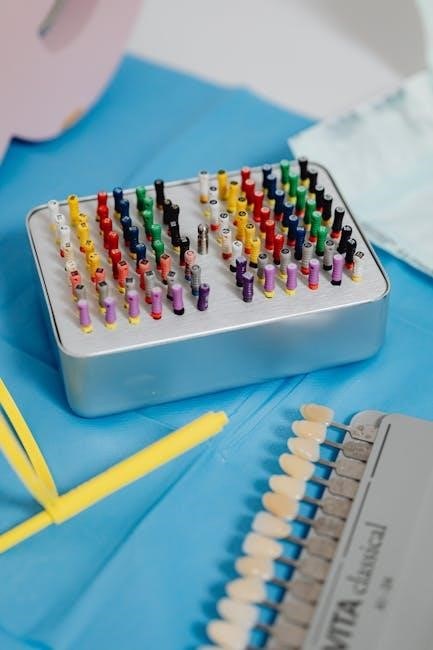
Technical Specifications of OM Fibers (Related to OM1, OM2, OM3)
OM1 utilizes 62.5 micron multimode glass, while OM2 employs 50 micron glass; OM3 features enhanced 50 micron glass supporting Gigabit Ethernet capabilities.
OM1 Fiber: 62.5 Micron Multimode Glass
OM1 fiber, defined by ISO/IEC 11801 standards, represents the foundational multimode fiber optic technology. Characterized by its 62.5-micron core diameter, OM1 is designed for shorter distance data transmissions, typically up to 330 feet (100 meters) at 1 Gigabit Ethernet speeds. It’s considered a legacy fiber type, often found in older installations.
Within the context of dental shade guides, OM1 corresponds to the brightest, most “Hollywood white” shade often used for central incisors in veneer cases. This fiber’s designation isn’t directly related to its optical properties in data transmission, but rather serves as a color identifier within the shade system. While technologically distinct from its data transmission role, the OM1 label provides a consistent reference point for achieving specific aesthetic outcomes in restorative dentistry;
OM2 Fiber: 50 Micron Multimode Glass

OM2 fiber represents an advancement over OM1, utilizing a smaller 50-micron core diameter. This refinement allows for improved performance, supporting Gigabit Ethernet transmissions up to 550 feet (168 meters). Though also considered a legacy fiber, OM2 offers increased bandwidth capabilities compared to its predecessor. It remains defined by the ISO/IEC 11801 standard for multimode fiber.
In dental applications, OM2 signifies a shade slightly less intense than OM1, frequently employed for lateral incisors or to create a natural transition from the brighter central incisors. This gradient approach avoids an unnaturally uniform appearance. Like OM1, the “OM2” designation in dentistry is a color reference, independent of the fiber’s data transmission characteristics, aiding in precise shade matching for aesthetically pleasing results.
OM3 Fiber: Enhanced 50 Micron Glass & Gigabit Ethernet
OM3 fiber builds upon the 50-micron core of OM2, but incorporates laser-optimized technology. This enhancement significantly boosts performance, enabling 10 Gigabit Ethernet transmissions over distances up to 300 meters (984 feet). Defined by the ISO/IEC 11801 standard, OM3 utilizes a specific wavelength range to minimize modal dispersion, improving signal quality and reach.
Within dental shade guides, OM3 represents a shade often used to achieve a natural brightness, frequently applied to lateral incisors or as a subtle transition from the more prominent OM1 shade on central incisors. It’s crucial to remember that the “OM3” designation in dentistry refers to a color, not the fiber optic technology, aiding in creating realistic and aesthetically pleasing veneer results. Shade conversion charts often include OM3 alongside Vita Classical and 3D shades.
Practical Applications & Considerations
Accurate shade matching with OM shades requires careful consideration of the 19-color guide, patient expectations, and selecting the appropriate OM1, OM2, or OM3 shade.
Using OM Shades for Accurate Shade Matching
Achieving precise shade matching with OM1, OM2, and OM3 shades necessitates a systematic approach, integrating both visual assessment and established shade guides like the 19-color system. Dentists often employ a gradient technique, utilizing OM1 for central incisors to establish a bright, “Hollywood white” base.
This brightness is then subtly transitioned to OM2 or OM3 for lateral incisors, creating a more natural and aesthetically pleasing appearance, avoiding the artificial look of uniformly white teeth. Understanding the nuances of each shade – OM1 being the whitest – is crucial. Comparing the patient’s existing dentition with the OM shades under standardized lighting conditions is paramount for successful results.
Furthermore, referencing shade conversion charts, such as those comparing OM shades to VITA Classical or 3D shades (like B1 or 1M1), can aid in accurate selection and communication within the dental team. Careful observation and meticulous technique are key to optimal shade matching.
The 19-Color Shade Guide & OM Shades
The comprehensive 19-color shade guide serves as a foundational tool for dentists, offering a broad spectrum of hues (A1-A4, B1-B4, C1-C4, D2-D4) to match natural dentition. However, the inclusion of OM1, OM2, and OM3 within this guide signifies their distinct role in achieving brighter, more aesthetic results, particularly for veneer cases.

These OM shades represent a specialized range geared towards “Hollywood white” smiles, extending beyond the traditional color parameters. Dentists utilize the 19-color guide to initially assess the patient’s existing shade, then strategically incorporate OM shades to enhance brightness.
The guide facilitates a nuanced approach, allowing for seamless transitions between traditional shades and the more intense OM hues. Effectively integrating both systems ensures a natural-looking, customized outcome, avoiding an overly artificial appearance. Careful consideration of value, chroma, and hue is essential when utilizing both guides.
Choosing the Right OM Shade for Your Patient
Selecting the appropriate OM shade—OM1, OM2, or OM3—requires a thorough understanding of the desired aesthetic outcome and the patient’s individual needs. Typically, full-smile veneer cases begin with OM1 for central incisors, creating a bright focal point. A gradual transition to OM2 or OM3 is then implemented for lateral incisors, mimicking natural tooth variations and avoiding a uniform, artificial appearance.
Consider the patient’s skin tone, lip position, and existing tooth shade when making your selection. OM1 delivers the most intense whiteness, while OM2 and OM3 offer slightly more nuanced, natural brightness.
Conversion charts, like those relating Portrait IPN to VITA Classical, can aid in shade translation. Ultimately, careful observation and clinical judgment are paramount to achieving a harmonious and aesthetically pleasing result for each patient.